Case Study 2: Gulf Islands Operation Centre, Sidney, B.C.
Type: Office
Location: Sidney, B.C.
Client: Parks Canada, Public Works and Government Services Canada.
Approximate gross area: 1070m2
Number of floors above ground: 2
Population: 35
Year of completion: 2007
Nominator:
Architect: Larry McFarland Architects Ltd.
Energy analysis: EnerSys Analytics Inc.
Mechanical Engineer: Stantec Consulting Inc.
Contractor: Ledcor Special Projects
Embodied energy analysis: Morrison Hershfield Ltd.
General Description
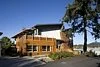
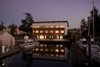
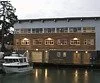
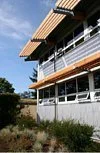
Located on the waterfront in Sidney, BC, this three-storey building serves as the headquarters for the Gulf Islands National Park Reserve, established in 2003, and includes facilities for marina operations, administrative staff, and an interpretive centre.
Project Highlights
First project in Canada to be awarded LEED Platinum.
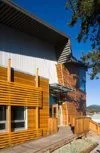
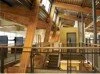
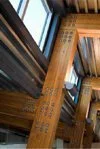
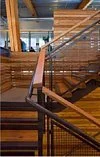
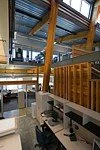
Heavy timber structure.
Open atrium design allows for extensive natural lighting and ventilation.
The project utilizes only off-the-shelf products, proven technology and local design and construction resources, resulting in a building that interacts intimately with the site upon which it is built.
While demonstrating how it is possible to drastically reduce the consumption of energy and water, it provides an exceptional indoor environment and was constructed using a significant amount of local and recycled materials. The sustainable systems are fully integrated with the architectural expression of the building.
The SBTool results (from 0 to 5)
Minimize impact of project construction
Preserve neighborhood character
Protect and enhance existing ecosystems
MAIN SUSTAINABILITY FEATURES
Sustainable Design Principles
Respect for the site for the site:
Minimize impact of project construction
Preserve neighborhood character
Protect and enhance existing ecosystems
Use of Site Systems:
Incorporate the natural operating systems occurring at the site:
Water
Light
Air
Heat
Architectural Integrations:
Integrate sustainable components into the architectural expression of the building.
Sustainable Site Design Strategies
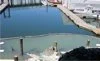
Utilize heat from the ocean
Protect existing native trees, remove invasion species
Remove contaminated soils
Take advantage of sea & land breezes
Use sun for day lighting& to generate electricity
Preserve existing character house and protect existing ornamental garden
Protect marine environment
Harvest rainwater for non-potable applications
Energy Efficiency Strategies
Ocean based geothermal system coupled with in-floor radiant heating
Exhaust air heat recovery
Photovoltaic system provides 20% of the building’s energy requirements
The exterior wall assembly has been engineered to optimize thermal performance and durability
Lighting density is 9.3 w/m2
Exterior sunshades control direct solar radiation
Open atrium promotes natural ventilation
Ventilation system consists of 100% outside air system with high induction diffusers
Occupancy demand ventilation control including carbon dioxide sensors
Building Envelope Design
Each façade designed in response to its orientation: sunshades provided on the South and East facades for passive shading.Continuous glazing on the North façade takes advantage of the expansive views
Exterior sunshades limit amount of direct sun into the building and help prevent heat gain in summer
The exterior wall assembly engineered to minimize air leakage and heat losses
Materials selected to resist the marine environment
Assemblies designed to be easily maintained and replaced
Interior Environmental Quality
Design of building encourages natural ventilation
Daylight is the primary means of illumination during daytime hours
Building designed to place all work spaces adjacent to opening windows
Workstations & offices furnished with lighting, temperature and air controls
Minimal finishes and materials used in the interior of the building
Finishes, materials and furniture selected on basis of low VOC emission levels
Green housekeeping products and procedures implemented
Ventilation system supply air delivers 100% outdoor air
Environmental Rating
75.5% Energy Reduction over MNECB Reference Building (> 12 LEED points)
Green House Gas Reduction = 32.3 tonnes/year
60% Potable Water Reduction
98% Reduction of potable water use for sanitary waste conveyance
Renewable Energy photovoltaic panels provide 20% of the building’s energy requirements
The building has been designed to be suitable for current climate conditions with no mechanical cooling implemented at present
The ocean loop/heat pump system has been designed to be capable of providing cooling to the radiant floor system if necessary
Project incorporates only off-the shelf products, proven technology and local design& construction resources. No emerging or prototypical technologies used.
More information about the building on websites of:
Architects Larry McFarland Architects Ltd
Canadian Architect